Lowell Area Schools Millage Proposals Set for Aug. 4 Ballot
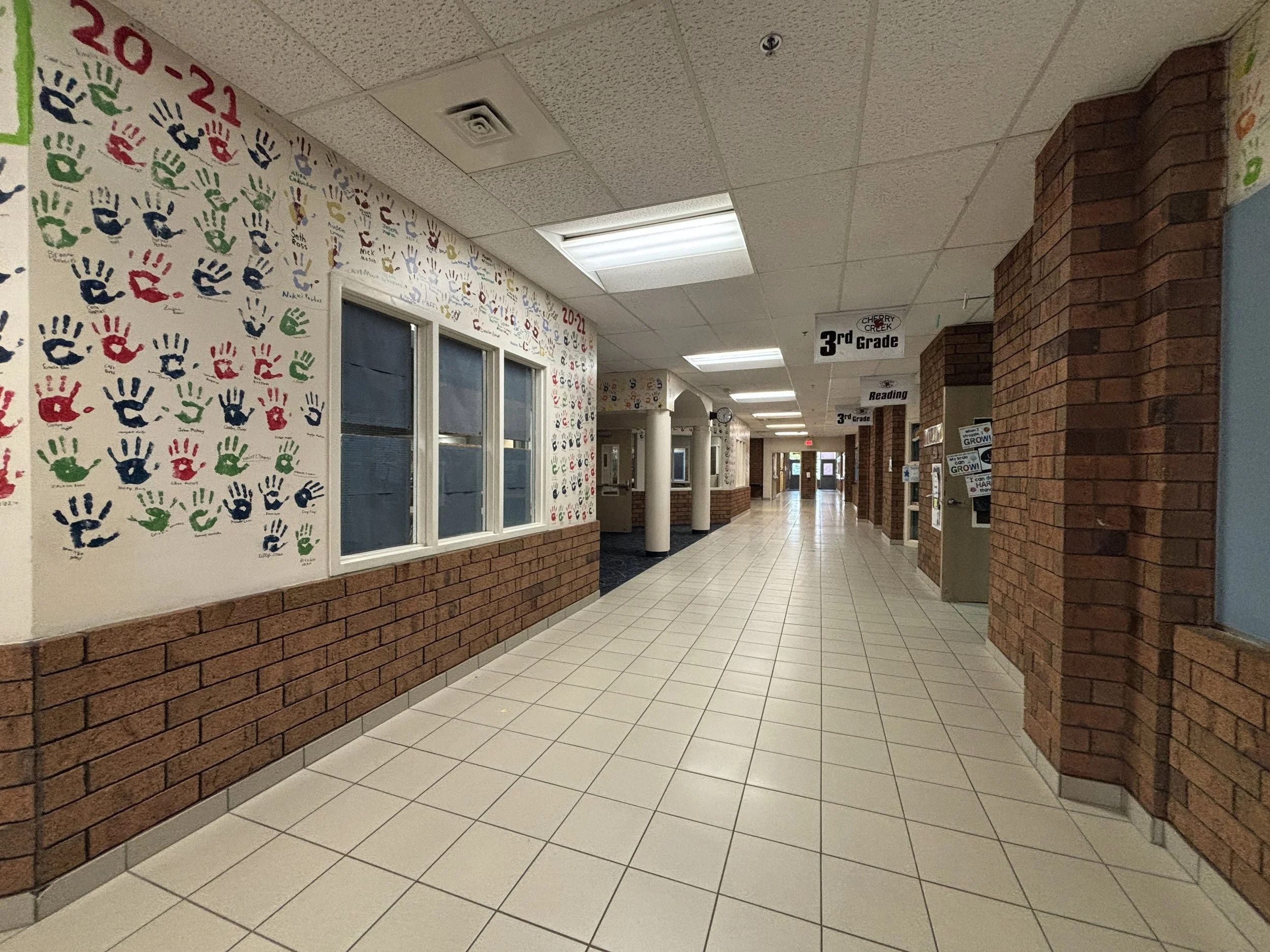
Cherry Creek Elementary pre-renovation in May 2026.
Justin Scott - 6/19/2026
Red Arrow Preps is fully independent of Lowell Area Schools. This article is being published for informational purposes only and was not paid for or sponsored by Lowell Area Schools. Red Arrow Preps does not endorse or oppose ballot proposals and takes a neutral stance on election measures.
——————————————————————
Lowell Area Schools voters will decide two millage proposals during the Tuesday, Aug. 4, 2026 election.
Absentee ballots will be available at city and township offices beginning June 25, 2026. Election Day voting will take place Aug. 4 from 7 a.m. to 8 p.m.
The two proposals will appear separately on the ballot. One is an operating millage proposal for non-homestead property. The other is a sinking fund millage proposal for building, security, technology and transportation-related purposes.
Operating Millage Proposal
The operating millage proposal would authorize Lowell Area Schools to levy up to 21 mills on all property except principal residences and other property exempted by law. The proposed period is 10 years, from 2027 through 2036.
According to the ballot language, the proposal would replace expiring millage and allow the district to continue levying the statutory rate of not more than 18 mills on non-homestead property. The additional 3 mills included in the ballot language would be available only to restore millage lost due to reductions required by the Michigan Constitution of 1963.
The ballot language states that if the millage is approved and 18 mills are levied in 2027, the district estimates it would collect approximately $5,216,248. The millage would replace millage that expires with the 2028 tax levy.

District materials describe the operating millage as a local property tax that funds day-to-day school operations, including teachers, support staff, instructional materials, transportation, utilities and programs. The district states that the millage applies to non-homestead property, such as businesses, rental properties, vacation homes and vacant land, and does not apply to a family’s primary residence.
The official ballot language reads:
This proposal will replace expiring millage and allow the school district to continue to levy the statutory rate of not to exceed 18 mills on all property, except principal residence and other property exempted by law, required for the school district to receive its revenue per pupil foundation allowance. The remaining 3 mills are only available to be levied to restore millage lost as a result of the reduction required by the Michigan Constitution of 1963 and will only be levied to the extent necessary to restore that reduction.
Shall the limitation on the amount of taxes which may be assessed against all property, except principal residence and other property exempted by law, in Lowell Area Schools, Kent and Ionia Counties, Michigan, be increased by 21 mills ($21.00 on each $1,000 of taxable valuation) for a period of 10 years, 2027 to 2036, to provide funds for operating purposes; the estimate of the revenue the school district will collect if the millage is approved and 18 mills are levied in 2027 is approximately $5,216,248 (this millage replaces millage that will expire with the 2028 tax levy)?”
Sinking Fund Millage Proposal
The second proposal asks voters to authorize Lowell Area Schools to levy up to 1 mill for six years, from 2027 through 2032, to create a sinking fund.
A sinking fund is a restricted fund that may be used for specific purposes authorized by law. The ballot language lists uses including the purchase of real estate for school sites, construction or repair of school buildings, school security improvements, technology upgrades, student transportation vehicles, certain trucks and vans used for maintenance, and related parts, supplies and equipment.
The ballot language states the district estimates it would collect approximately $1,516,742 in 2027 if the millage is approved and levied.
District materials state that sinking fund dollars cannot be used for salaries, benefits, curriculum materials, classroom supplies, software subscriptions, extracurricular activities or other operating costs. The district also states that the current sinking fund has been used for projects such as roof repairs, HVAC upgrades, parking lot resurfacing, building security improvements and infrastructure maintenance.
The official ballot language reads:
Shall the limitation on the amount of taxes which may be assessed against all property in Lowell Area Schools, Kent and Ionia Counties, Michigan, be increased by and the board of education be authorized to levy not to exceed 1 mill ($1.00 on each $1,000 of taxable valuation) for a period of 6 years, 2027 to 2032, inclusive, to create a sinking fund for the purchase of real estate for sites for, and the construction or repair of, school buildings; for school security improvements; for the acquisition or upgrading of technology; for the acquisition of student transportation vehicles; for the acquisition of parts, supplies, and equipment used for the maintenance of student transportation vehicles; for the acquisition of eligible trucks and vans used to carry parts, equipment, and personnel for or in the maintenance of school buildings; for the acquisition of parts, supplies, and equipment used to maintain such trucks and vans; and all other purposes authorized by law; the estimate of the revenue the school district will collect if the millage is approved and levied in 2027 is approximately $1,516,742?”
District Letter to Families and Staff
Lowell Area Schools also sent the following letter to families and staff regarding the two proposals:
Dear Lowell Area Schools Families and Staff,
We want to make sure our community is informed about two proposals that will appear on the August 4 ballot. These measures are important to the ongoing operation and care of our schools, and we want to take a moment to explain what each one means for Lowell Area Schools.
Operating Millage | 21 Mills on Non-Homestead Property
The first proposal is our operating millage, which is levied on non-homestead and other non-exempt properties. This millage does not apply to a family's primary residence or other exempt property. These are things like commercial properties, rental properties, and second homes. This proposal would authorize 21 mills of operating millage however the maximum legal rate that can be levied is 18 mills.
This millage represents approximately 10% of the district's total budget and is required by the State of Michigan in order for the District to receive the full per-pupil foundation allowance.
You may be wondering why the authorization is for over 18 mills. Over time, by operation of Michigan law, a millage that was originally authorized can be reduced, sometimes significantly, when property values in the District rise faster than inflation. Districts like ours, with a history of property tax appreciation, often ask voters to consider millage proposals authorizing additional millage as a routine and necessary part of how Michigan school funding works. This proposal would authorize the District to levy the full 18 mills necessary for the District to continue receiving the full revenue per pupil foundation allowance. The remaining 3 mills would only be used to maintain the millage rate at the 18 mill statutory limit should such reductions occur.
Sinking Fund Millage | 1 Mill
The second proposal is a sinking fund millage. A sinking fund is a dedicated millage that can only be used for building and site improvements, security improvements, and the purchase of instructional technology, buses and certain vehicles. It cannot be used for salaries or general operating expenses. If approved, this funding would allow the district to address critical facility needs across our buildings. The sinking fund allows LAS to maintain our buildings for larger projects like roofs, parking lots, security upgrades including security cameras and building access systems, instructional technology and school bus purchases. The sinking fund allows LAS to hold our general budget harmless, reducing potential impacts to school programming. These are the kinds of improvements that help keep our buildings safe, functional, and ready for students and staff every day. Before the current sinking fund expires, some projects will be taking place this summer. These projects include replacing aging plumbing at Bushnell Elementary, replacing the roof and Murray Lake Elementary and replacing seating and flooring in the Lowell Performing Arts Center.
Thank you for taking the time to learn about these proposals, for the trust you place in us, and for the role you play in making Lowell Area Schools a place where every student can thrive. We are grateful for this community and we are honored to serve it.
Sincerely,
Nate Fowler
Superintendent
Voters will decide each proposal independently on the Aug. 4 ballot.